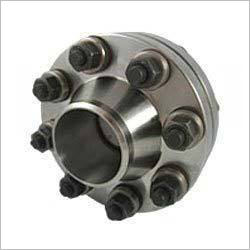
About Insulating Flange
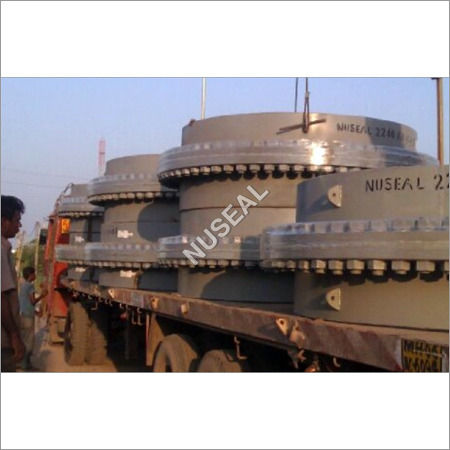
Insulating Flange is an especially designed industrial grade connecting element which is used to make rigid joints in between high pressure pipes in industries like petrochemical, water treatment plants, chemical, pharmaceutical, paint and other. It is provided with an insulating gasket in between the plates to prevent the flow of stray currents for better protection. Top quality stainless steel is used for the fabrication of this component which imparts higher strength and robustness. The flanged plates are fixed with the help of mechanical fasteners.
Specification of Insulating Flange :
|
Material Standard
|
ASTM A182,ANSI B16.5,ASTM A105
|
|
Size
|
Upto 100 Inch
|
|
Brand
|
Nuseal
|
|
Rated Pressure (Bar)
|
150 to 2500
|
Superior Electrical IsolationInsulating flanges are engineered to provide superior electrical insulation, preventing galvanic corrosion between jointed piping sections. This is achieved through high-resistance gaskets, washers, and sleeves, making them essential in pipelines carrying dissimilar metals and in cathodic protection systems.
Versatile Compatibility and DesignAvailable in a wide array of flange typesincluding weld neck, slip on, blind, and moreour insulating flange assemblies fit global standards (ANSI, DIN, JIS, BS, IS, GOST). With a broad size range and compatibility with various pressure classes, these flanges can be custom-specified for diverse industrial projects.
Durable Materials and Reliable TestingManufactured from premium carbon steel, stainless steel, or alloy steel, and paired with industrial-grade insulating gaskets, these flanges are built for longevity and dependability. Hydrostatic and electrical resistance tests in accordance with international standards ensure each assembly achieves optimal performance.
FAQs of Insulating Flange:
Q: How does an insulating flange provide electrical isolation in pipeline systems?
A: An insulating flange creates a continuous non-conductive barrier between sections of metallic piping, preventing stray currents and eliminating galvanic corrosion. This is achieved with insulated gaskets, sleeves, and washers made from materials such as phenolic, polyethylene, or mylar.
Q: What types of gaskets are available for these insulating flanges?
A: Our insulating flanges can be equipped with full face (FF), raised face (RF), or ring type joint (RTJ) gaskets, depending on the application and flange type. Gasket materials include neoprene, PTFE, and other industrial-grade insulators for robust sealing and isolation.
Q: When should insulating flanges be installed in a pipeline?
A: Insulating flanges are recommended at transition points between different metals, in cathodically protected pipelines, or where electrical isolation is crucialsuch as in oil and gas processing, refineries, and water transmission lines.
Q: Where are your insulating flanges typically used?
A: These flanges are widely adopted in industries including oil & gas, petrochemical, chemical processing, and water pipelinesessentially wherever pipeline integrity and electrical isolation are required to extend asset life and ensure operational safety.
Q: What is the standard process for testing insulating flanges before shipment?
A: Each assembly undergoes stringent hydrostatic pressure and electrical resistance testing, in line with standards such as NACE MR0175, API 6A, and ISO 17292. This ensures that each product meets or exceeds specified safety and performance criteria.
Q: How do users benefit from choosing your insulating flange kits?
A: Clients benefit from extended service life, reduced maintenance costs, and minimized risk of pipeline failures due to corrosion. The anti-corrosive coatings and robust design ensure reliable operation in harsh industrial environments.






 Send Inquiry

 Send Inquiry

 Send Inquiry
 Send SMS